
Premises Liability and the Duty of Property Owners
Property owners and businesses in Florida have a legal duty to maintain reasonably safe conditions for customers and visitors. This responsibility is especially important in retail environments where foot traffic is constant, and hazards can develop quickly.
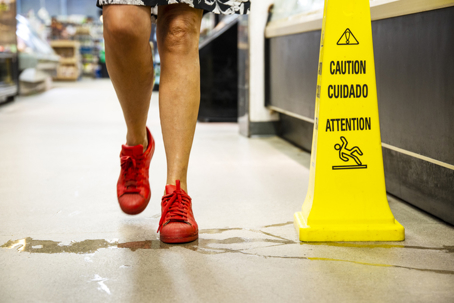
When a store fails to address a known safety issue, such as a wet floor, broken handrail, or obstructed walkway, and someone is injured as a result, the legal question becomes whether the business acted reasonably under the circumstances.
Florida courts evaluate these cases carefully by focusing on what the business knew, or should have known, about the hazard.
Actual Knowledge vs. Constructive Knowledge
A key issue in store-related injury cases is whether the business had actual or constructive knowledge of the hazard.
Actual knowledge means the business was directly aware of the unsafe condition. This could include employee reports, prior complaints, or direct observation.
Constructive knowledge means the hazard existed long enough or occurred frequently enough that the business should have known about it through reasonable inspection practices. For example, a spill left unattended in a high-traffic aisle for an extended period may establish constructive knowledge.
Courts in Florida often rely on evidence such as surveillance footage, cleaning logs, and employee testimony to determine whether the business had sufficient awareness of the danger.
Common Types of Store Hazards in Florida Cases
Retail injury cases often involve hazards that could have been prevented with proper maintenance or timely cleanup. Common examples include slippery floors, uneven flooring, poorly marked hazards, falling merchandise, or inadequate lighting in walkways or parking areas.
In busy commercial areas such as shopping centers in Fort Myers or Naples, these risks can increase during peak hours or seasonal tourism periods.
How Courts Evaluate Reasonableness
Florida courts do not require businesses to guarantee absolute safety. Instead, they evaluate whether the business took reasonable steps to prevent harm.
This includes assessing inspection procedures, employee training, and response time once a hazard is discovered. If a store has policies in place but fails to follow them consistently, that failure may be considered in determining liability.
Courts also consider whether warning signs were posted and whether the hazard could have been addressed in a timely manner.
The Role of Evidence in These Cases
Evidence plays a critical role in proving liability in store hazard cases. Surveillance footage can show how long a hazard was present. Maintenance records can reveal whether inspections were performed. Witness testimony can help establish whether employees were aware of the issue before the incident occurred.
Without this evidence, it may be more difficult to establish that the store had knowledge of the hazard.
Cape Coral Premises Liability Attorneys
When a store fails to address a known safety hazard, injured individuals may have the right to pursue compensation for their injuries and related losses. These cases often depend on detailed evidence and careful legal analysis.
If you were injured in a retail store in Southwest Florida, contact Lusk, Drasites & Tolisano at (239) 908-4930 to discuss your situation and learn more about your legal options.